
Commercial HVAC Maintenance: A Strategic Protocol for Critical Asset Management
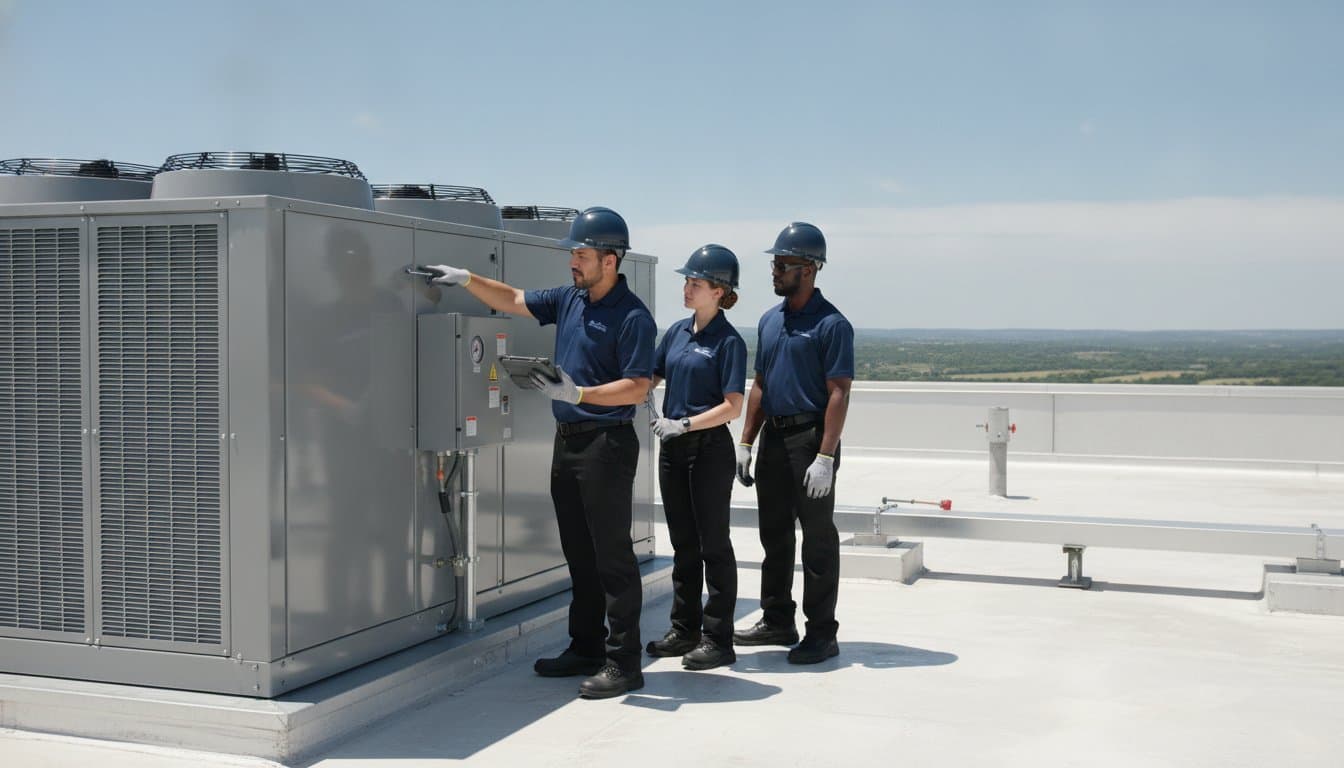
The common perception that mechanical upkeep is merely a recurring operational expense ignores the reality that a facility's infrastructure is a high-stakes financial asset requiring disciplined oversight. A rigorous approach to commercial hvac maintenance serves as the primary defense against the systemic degradation that leads to unpredictable downtime and catastrophic capital loss. It's likely that you recognize the mounting pressure of rising energy costs and the looming threat of equipment failure during peak thermal loads, particularly as Texas infrastructure begins to navigate the stringent requirements of the 2024 Uniform Mechanical Code. This article demonstrates how an engineering-led maintenance protocol transitions your operations from a reactive posture to one of total project control, ensuring that every mechanical component operates at peak efficiency while adhering to the latest low-GWP refrigerant regulations. We will examine the technical methodologies that extend equipment lifespan, stabilize operational budgeting, and optimize indoor air quality to ensure long-term occupant comfort and system stability.
Key Takeaways
- Learn why transitioning from reactive repairs to a disciplined lifecycle management protocol is essential for protecting your facility's long-term capital investments.
- Identify the primary technical failure points within high-tonnage chillers and cooling towers to prevent catastrophic system outages.
- Understand how to mitigate the specific mechanical stress caused by Central Texas humidity and heat through a methodical commercial hvac maintenance strategy.
- Discover how engineering-driven tools like Building Information Modeling (BIM) and in-house fabrication provide a superior framework for infrastructure oversight and rapid emergency recovery.
Table of Contents
- Redefining Commercial HVAC Maintenance as Strategic Asset Management
- The Anatomy of Industrial Mechanical Systems: Critical Failure Points
- Methodologies of Oversight: Reactive vs. Preventive vs. Predictive
- Navigating the Central Texas Climate: Humidity and Thermal Loads
- The J3 Mechanical Services Approach: Engineering-Led Maintenance and Recovery
Redefining Commercial HVAC Maintenance as Strategic Asset Management
To view Heating, ventilation, and air conditioning (HVAC) systems as mere utilities is to overlook their fundamental role as critical infrastructure assets. Professional commercial hvac maintenance isn't a collection of disparate repair tasks; it's a disciplined protocol designed to ensure long-term infrastructure stability through technical mastery. The industry is moving away from the "run-to-fail" mentality, opting instead for a model that prioritizes the management of mechanical asset lifecycles through precise engineering and systematic execution. By adopting this framework, stakeholders can mitigate the risks associated with aging equipment and ensure that every component performs according to its original design specifications.
This shift toward commercial HVAC asset management allows facility managers to transform unpredictable capital expenditures into predictable, logic-driven operational budgets. When technical rigor is applied to every inspection, the likelihood of a catastrophic system failure diminishes significantly. It's no longer about fixing what is broken, but rather about verifying the integrity of the system to prevent the breakage from occurring. This proactive stance ensures that large-scale mechanical projects maintain their value over decades rather than years.
The Financial Case for Rigorous Maintenance
Financial performance and mechanical integrity are inextricably linked. While the upfront cost of a methodical maintenance program is visible, the return on investment manifests through the mitigation of high-cost emergency recovery expenses. A tuned system doesn't just run; it performs with an accuracy that reduces monthly utility overhead. According to ASHRAE 90.1-2022 standards, which are now referenced by Texas codes, optimized energy management is essential for buildings larger than 25,000 square feet. Neglected systems carry hidden costs, such as lost tenant productivity and potential inventory spoilage, which can quickly exceed the cost of a year's worth of professional oversight.
Compliance and Regulatory Standards in 2026
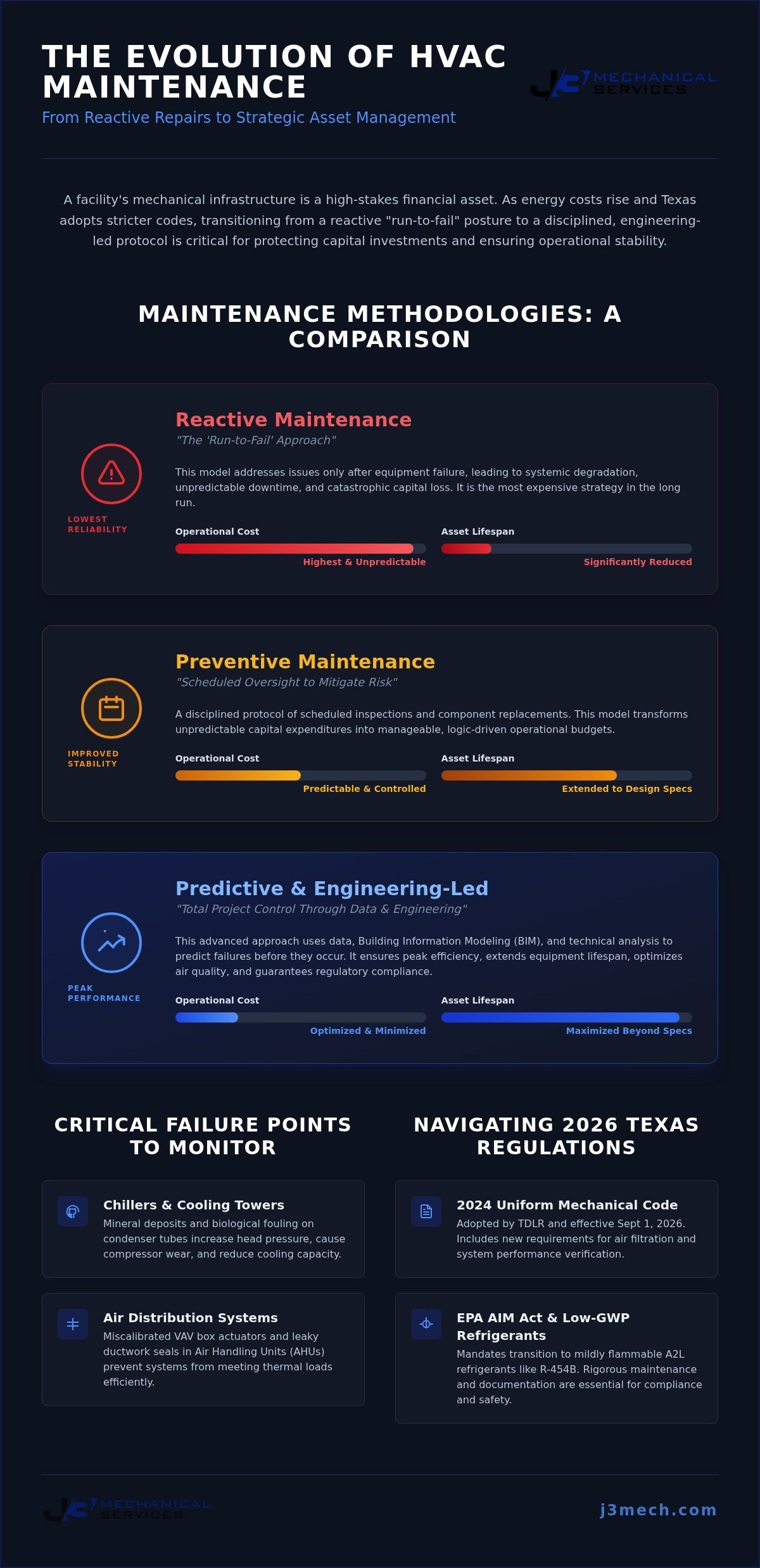
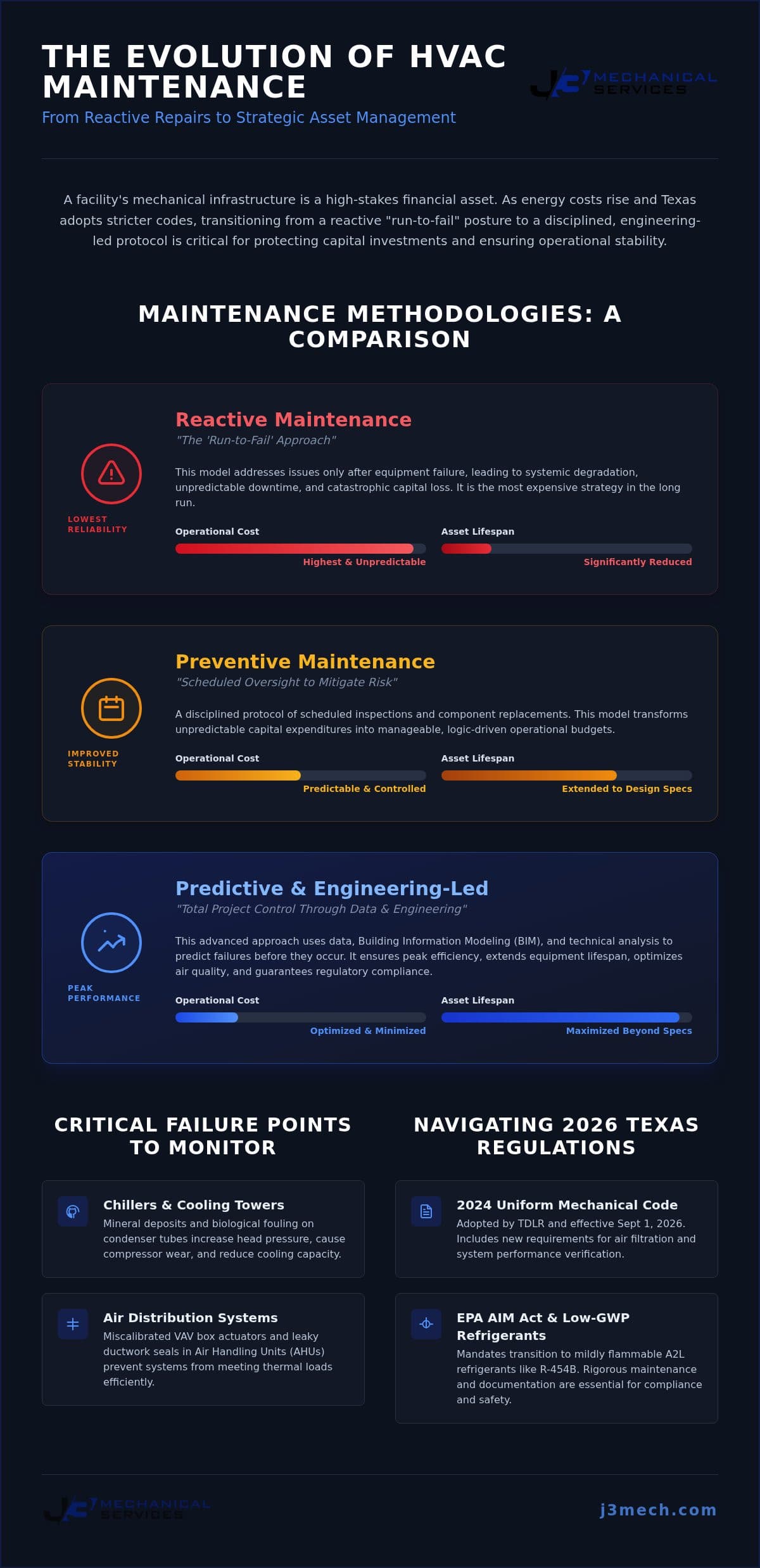
Navigating the regulatory environment in 2026 requires a proactive stance on documentation and technical standards. The Texas Department of Licensing and Regulation (TDLR) has adopted the 2024 Uniform Mechanical Code, which takes effect on September 1, 2026. This updated code includes new requirements for air filtration and the use of low-GWP refrigerants. Simultaneously, the EPA AIM Act mandates a transition to mildly flammable A2L refrigerants, such as R-454B. Rigorous maintenance documentation serves as a verification of ethical duty, ensuring that warranties remain valid and that the facility meets all environmental sustainability mandates. Without a systematic record of service, insurance claims and warranty validations become increasingly difficult to secure.
The Anatomy of Industrial Mechanical Systems: Critical Failure Points
The intricate architecture of large-scale mechanical systems demands a maintenance protocol that accounts for the unique failure points inherent in high-tonnage equipment. Effective commercial hvac maintenance begins with a thorough evaluation of centrifugal chillers and cooling towers, where the management of heat transfer surfaces is paramount. Mineral deposits and biological fouling on condenser tubes can lead to elevated head pressures and increased compressor wear, eventually resulting in a total loss of cooling capacity if left unaddressed. A disciplined technician views these systems as integrated loops where water quality directly dictates the longevity of the mechanical hardware, requiring regular verification of chemical concentrations and blowdown rates.
Beyond the central plant, the complexity of air distribution systems like Variable Air Volume (VAV) boxes and high-capacity Air Handling Units (AHUs) presents significant operational risks. These units rely on precise modulation of dampers and fan speeds to meet the fluctuating thermal loads of a modern commercial space. Achieving the goal of optimizing commercial air conditioning requires an engineering-led approach that verifies the calibration of actuators and the integrity of ductwork seals. This level of oversight ensures that the system doesn't just move air, but does so with the efficiency required to meet modern standards like ASHRAE 90.1-2022, which mandates energy management for buildings over 25,000 square feet.
Hydronic and Steam System Oversight
Hydronic and steam systems necessitate a specialized oversight protocol to protect the integrity of commercial boilers and process piping. Internal corrosion and scaling are constant threats that can only be mitigated through consistent water treatment and chemical balancing. Technicians must conduct rigorous testing of pressure relief valves and safety controls, as these components are the final line of defense against hazardous over-pressurization in high-pressure steam environments. Maintaining the metallurgical health of the piping network is a long-term investment that prevents the need for invasive and costly piping replacements that disrupt facility operations.
Electrical Components and Control Logic
The electrical infrastructure and control logic that drive industrial HVAC systems are often the most overlooked critical failure points. Variable Frequency Drives (VFDs) and motor starters must be verified for operational accuracy to ensure they aren't placing undue stress on the mechanical components they control. Recalibrating sensors and thermostats is essential for aligning the system's control logic with the actual building occupancy and thermal load, which is a key driver for reducing energy consumption in North Texas facilities. Systematic inspection of electrical terminations for signs of thermal stress or arcing is a non-negotiable safety standard. For those seeking to secure their facility's performance, exploring the technical depth of J3 Mechanical Services' professional offerings provides the necessary assurance of operational stability.
Methodologies of Oversight: Reactive vs. Preventive vs. Predictive
The selection of an oversight methodology is a strategic decision that dictates the long-term reliability of a building's mechanical core. A disciplined commercial hvac maintenance program typically falls into one of three categories: reactive, preventive, or predictive. Reactive maintenance represents the high-risk "run-to-fail" model where intervention only occurs after a component has ceased to function. In contrast, preventive maintenance (PM) utilizes a series of scheduled tasks designed to mitigate foreseeable failures through routine inspection and component replacement. The most advanced tier, predictive maintenance (PdM), leverages diagnostic data and AI-powered monitoring to identify impending failures before they manifest; this allows for intervention at the optimal moment of technical necessity. Choosing the correct approach requires an objective analysis of facility criticality, where the cost of a potential outage is weighed against the investment in ongoing oversight. Engaging a qualified commercial hvac contractor with engineering-led capabilities is essential for determining which methodology aligns with your facility's operational risk profile and capital budget.
The Limitations of the 'Run-to-Fail' Model
The limitations of the reactive model are particularly evident in the high-stakes environment of Central Texas. Relying on an unexpected commercial hvac repair often results in costs that far exceed those of a planned intervention, as emergency logistics and expedited parts procurement inflate the final expenditure. Beyond the financial burden, the logistical strain of a sudden system failure disrupts tenant operations and can lead to significant reputational damage for property managers. High-occupancy buildings, such as medical facilities or data centers, don't have the luxury of a reactive stance, as even a brief loss of climate control can compromise sensitive equipment or occupant safety during periods of extreme heat.
Engineering a Custom Maintenance Schedule
Engineering a custom maintenance schedule is a meticulous process that accounts for system age, usage intensity, and the specific environmental conditions of the site. A facility that runs continuously faces a higher rate of mechanical degradation than one with intermittent cycles, necessitating more frequent verification of moving parts. Seasonal tune-ups are a critical component of this schedule, specifically timed to prepare infrastructure for the extreme thermal loads of the Texas summer where temperatures routinely exceed 100°F. For new installations, integrating Professional Start-Up Services is essential for establishing performance baselines that inform future commercial hvac maintenance cycles. This baseline data ensures that every subsequent inspection is measured against the system's peak design efficiency, providing a clear narrative of the asset's operational health over time. Facilities with high-output production environments should also reference the protocols outlined in a comprehensive industrial hvac service framework to ensure their maintenance schedules account for the elevated mechanical demands of continuous industrial operations.
Navigating the Central Texas Climate: Humidity and Thermal Loads
The environmental conditions of Central Texas demand a level of mechanical oversight that exceeds standard industry benchmarks. High ambient temperatures, frequently exceeding 100°F, combined with the significant latent load of Gulf Coast humidity, place an extraordinary burden on compressors and capacitors. In this region, commercial hvac maintenance must be tailored to address the dual threats of sensible heat and moisture-driven system strain. For facilities in Corpus Christi and the Rio Grande Valley, the focus shifts toward aggressive dehumidification protocols to prevent the systemic degradation associated with high moisture levels. Conversely, the high thermal loads of San Antonio and Austin require a specialized approach to condenser efficiency to maintain operational stability during the peak of the cooling season. Property managers who seek to mitigate these risks often prioritize partnerships with commercial hvac companies in San Antonio that possess a deep understanding of these localized stressors.
Condenser and Coil Rigor for High-Heat Environments
Operating a system in a 100°F+ environment leaves no margin for error in heat transfer efficiency. Coil surfaces must undergo deep-cleaning to remove the accumulation of local dust and debris, such as cedar pollen; these contaminants act as insulators and force the system to work harder to reject heat. Technicians must conduct precise verification of refrigerant charges, ensuring that subcooling and superheat levels are optimized for extreme conditions. This level of rigor prevents the premature failure of critical components and ensures that the system maintains its design capacity even when the building load is at its maximum. Neglecting this aspect of maintenance can lead to a significant increase in energy consumption, often pushing operating costs toward the higher end of the verified $2 to $6 per square foot range common in North Texas. Manufacturing and processing facilities operating under these conditions benefit from the data-driven uptime strategies detailed in a dedicated industrial hvac service reference that addresses the unique demands of high-output mechanical environments.
Dehumidification and Indoor Air Quality (IAQ)
In humid climates, the management of condensate is a primary concern for maintaining both system integrity and indoor air quality. Drain lines and condensate pumps require regular inspection to prevent the biological growth that thrives in stagnant water. This growth can lead to mold issues within the ductwork if not properly managed through a systematic cleaning protocol. Sterile commercial environments often benefit from the integration of UV lighting and high-efficiency filtration to manage airborne contaminants. Optimizing ventilation rates is a delicate balance. Technicians must ensure sufficient fresh air intake while maintaining the system's dehumidification capacity to prevent indoor humidity spikes. To ensure your facility remains resilient against these unique environmental pressures, consider the technical expertise offered by J3 Mechanical Services' engineering-led team.
The J3 Mechanical Services Approach: Engineering-Led Maintenance and Recovery
J3 Mechanical Services interprets commercial hvac maintenance as a rigorous engineering discipline rather than a simple checklist of service tasks. By integrating Building Information Modeling (BIM) into our oversight protocols, we maintain a digital record of system performance that allows for the identification of systemic risks before they result in physical degradation. This methodology ensures that every inspection is informed by the original design intent and mechanical requirements of the facility. Our in-house fabrication capabilities further support this approach, providing the logistical agility needed to address component wear with custom-engineered solutions that meet exact technical standards. This integrated model ensures that your mechanical infrastructure remains stable, predictable, and fully optimized for long-term performance.
A strategic partnership with J3 Mechanical Services provides the assurance of total project control, backed by a 24/7 emergency response capability that serves as the ultimate safety net for maintained facilities. We operate with a sense of disciplined, faith-based accountability, viewing the reliability of your building's climate control as a critical infrastructure responsibility. This commitment to ethical consistency and technical mastery ensures that every service call is executed with the gravitas and precision required for high-stakes commercial environments. By prioritizing stability and proactive risk mitigation, we help property managers avoid the volatility of emergency repairs and the high costs of premature equipment replacement.
Leveraging Technical Mastery for Maintenance
The technical depth of J3 Mechanical Services is most evident in our ability to execute rapid component replacement through in-house fabrication. When a maintenance inspection identifies a failing custom part, our team can produce a precise replacement without the delays associated with third-party supply chains. We utilize digital modeling to track the operational lifecycle of your equipment, creating a narrative of system health that informs every future intervention. Our technicians are trained to the highest industrial standards, ensuring they possess the expertise to manage the complexities of high-tonnage chillers and integrated control logic with absolute accuracy. This level of preparation transforms the maintenance process into a forward-thinking strategy that preserves the integrity of your mechanical assets.
Next Steps: Securing Your Infrastructure
Securing the long-term stability of your facility begins with an objective evaluation of your mechanical core. We invite you to initiate a comprehensive facility audit and mechanical baseline assessment, which provides the data necessary to customize a maintenance agreement tailored to your operational goals. Whether your facility requires a new commercial hvac installation or the implementation of a disciplined oversight protocol for existing systems, J3 Mechanical Services delivers the professional expertise needed for sustained excellence. Contact our engineering-led team to establish a baseline for your mechanical infrastructure and ensure the ongoing reliability of your facility's climate control systems.
Securing the Operational Future of Your Mechanical Infrastructure
Transitioning from a reactive "run-to-fail" mindset to a disciplined lifecycle strategy is the only way to protect significant capital investments in today's regulatory and environmental landscape. By prioritizing a methodical program of commercial hvac maintenance, facility managers in San Antonio, Austin, and the Texas Gulf Coast can mitigate the risks of catastrophic downtime while ensuring compliance with evolving energy standards. This approach utilizes BIM-coordinated engineering mastery and in-house fabrication to maintain system integrity from the inside out, providing a level of oversight that generic service contracts simply can't match.
When infrastructure is viewed as a strategic asset rather than an operational burden, the results are measurable in both equipment longevity and budgetary predictability. Our team stands ready to provide the 24/7 emergency repair recovery and technical precision your facility requires to thrive in the Central Texas climate. Secure your facility's infrastructure with J3 Mechanical's strategic maintenance programs. We look forward to establishing a baseline of excellence for your mechanical systems and ensuring your building remains a stable, high-performing environment for years to come.
Frequently Asked Questions
How often should a commercial HVAC system be professionally serviced in Texas?
Most high-tonnage mechanical systems in Texas require professional service at least four times per year to account for the extreme thermal loads and high humidity levels. While seasonal tune-ups in the spring and fall are standard, the continuous operation required during 100°F+ summers necessitates more frequent verification of refrigerant charges and coil cleanliness to ensure operational stability.
What is the difference between residential and commercial HVAC maintenance?
Commercial maintenance involves significantly larger scales and technical complexities, such as centrifugal chillers, cooling towers, and Variable Frequency Drives, which aren't found in residential settings. The protocol for industrial infrastructure focuses on lifecycle asset management and the mitigation of systemic risks rather than simple comfort, requiring a higher level of engineering expertise and disciplined oversight.
Can a maintenance plan help lower my building's energy consumption?
A disciplined commercial hvac maintenance program reduces energy consumption by ensuring that every component operates at its peak design efficiency. Tuned systems avoid the excessive power draw caused by fouled coils or miscalibrated sensors; this is critical for meeting ASHRAE 90.1-2022 energy standards, which mandate energy management for buildings larger than 25,000 square feet.
What are the most common signs that my commercial HVAC system needs immediate repair?
Immediate indicators of system distress include unusual mechanical vibrations, sudden spikes in indoor humidity levels, or unexplained increases in utility expenditures. If the system fails to maintain setpoints during peak thermal loads, it often signals a critical failure in the refrigeration cycle or control logic that requires rapid technical intervention to prevent a total outage.
How does regular maintenance affect my manufacturer's warranty?
Most industrial equipment manufacturers require documented proof of professional maintenance to keep warranties valid. Without a systematic record of inspections and component replacements, claims for expensive parts like compressors or heat exchangers may be denied. This leaves the facility owner responsible for the full capital expenditure of a replacement that could've been covered.
What should be included in a comprehensive commercial HVAC maintenance checklist?
A rigorous checklist must include deep cleaning of condenser and evaporator coils, verification of refrigerant levels, and testing of all electrical terminations and safety controls. For complex systems, the protocol should also encompass the recalibration of VAV boxes and the chemical balancing of hydronic loops to prevent internal corrosion and scaling within process piping.
Is 24/7 emergency service included in a typical maintenance agreement?
A strategic maintenance partnership often includes priority access to 24/7 emergency recovery as a safety net for critical operations. This ensures that maintained facilities receive expedited technical support during unforeseen outages. This rapid response minimizes the logistical strain on building occupants and protects sensitive infrastructure from the consequences of prolonged climate control loss.
How does BIM technology improve the maintenance of commercial mechanical systems?
Building Information Modeling (BIM) provides a digital twin of the mechanical infrastructure, allowing technicians to identify bottleneck risks and access precise component data instantly. This technical mastery improves commercial hvac maintenance accuracy by providing a clear understanding of the system's design from the inside out, facilitating faster repairs and more effective predictive oversight.
Need a hand with your building's HVAC?
Free quotes and honest answers from licensed commercial technicians across South Texas.