
The Role of a Commercial HVAC Contractor in Modern Facility Infrastructure
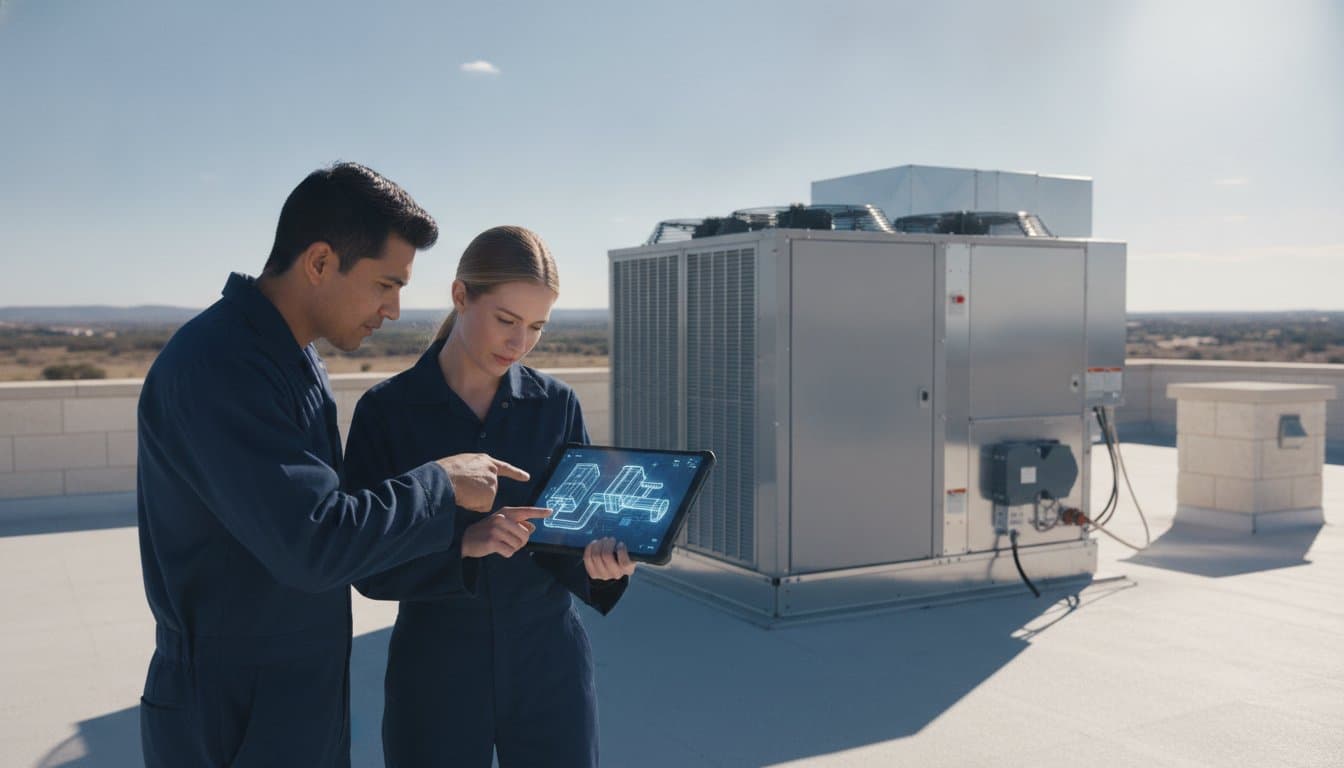
A modern facility represents a sophisticated ecosystem of thermal dynamics and air quality requirements where a single planning oversight often manifests as a catastrophic operational failure. While climate control is frequently treated as a commodity, a professional commercial hvac contractor functions as a strategic engineering partner dedicated to the integrity of the building’s critical infrastructure. You've likely experienced how fragmented communication between trades leads to expensive change orders and delayed occupancy, creating a level of friction that compromises both your capital budget and your operational timeline.
This article provides a comprehensive examination of how specialized contractors utilize Building Information Modeling and precision in-house fabrication to mitigate these risks before the first component arrives on-site. We will explore the strategic implications of the 2026 transition to low-Global Warming Potential refrigerants and detail how structured mechanical oversight ensures long-term asset protection. By understanding the rigorous methodology required for high-performance systems, you'll gain the insight necessary to secure a facility that operates with maximum efficiency and predictable reliability.
Key Takeaways
- Identify the technical distinctions between residential services and the high-tonnage, multi-zone requirements managed by a professional commercial hvac contractor.
- Explore the role of Building Information Modeling (BIM) in creating digital twins that verify system integrity and prevent inter-trade coordination failures during the construction phase.
- Examine the engineering standards necessary to navigate the Texas climate, focusing on high-efficiency ratings and proactive humidity management for critical infrastructure.
- Gain a comprehensive perspective on mechanical asset management through structured maintenance programs that extend the operational life of complex facility systems.
Table of Contents
- Defining the Role of a Commercial HVAC Contractor in Modern Infrastructure
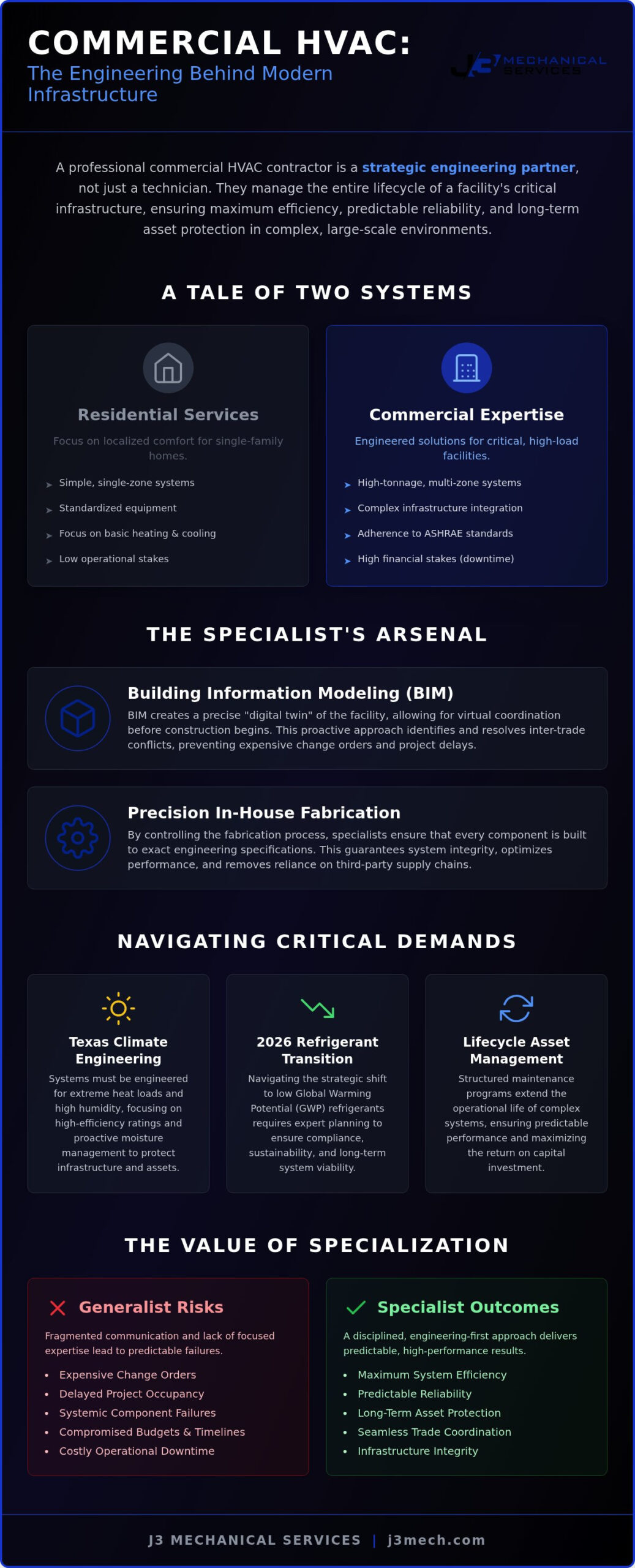
- The Critical Distinction: Why Commercial Systems Require Specialized Expertise
- Advanced Coordination Protocols: Leveraging BIM and In-House Fabrication
- Navigating Regional Demands: Commercial HVAC Standards for the Texas Climate
- The Lifecycle Approach: Ensuring Long-Term Reliability of Mechanical Assets
Defining the Role of a Commercial HVAC Contractor in Modern Infrastructure
A professional commercial hvac contractor serves as the primary architect of a building's internal climate, managing the lifecycle of mechanical systems that sustain large-scale operations. Unlike residential technicians who focus on localized comfort, these specialists oversee the Heating, ventilation, and air conditioning (HVAC) requirements of complex environments like data centers, medical facilities, and industrial complexes. This responsibility encompasses the integration of high-tonnage equipment and sophisticated air distribution networks that must adhere to rigorous ASHRAE standards and specific Texas building codes. By functioning as technical consultants, they ensure that every component is sized and calibrated for maximum efficiency under extreme load conditions. It's a role defined by engineering rigor rather than simple mechanical repair.
Scope of Commercial Mechanical Services
Modern facility infrastructure requires more than simple cooling; it demands a comprehensive mechanical strategy. The scope of work includes precise system design for new construction and the execution of intricate facility retrofits. Contractors must manage specialized components, including cooling towers and industrial boilers, while implementing advanced commercial hvac solutions that prioritize energy conservation. These systems often integrate directly with building automation platforms, allowing for real-time monitoring and automated humidity control that preserves the structural integrity of the asset. Effective management at this level requires an understanding of how air quality impacts both occupant health and the longevity of sensitive electronic equipment.
Specialization vs. General Contracting
Technical mastery is achieved through narrow focus rather than broad service offerings. While some mechanical firms attempt to manage multiple trades, a dedicated commercial hvac contractor prioritizes the depth of their specialized knowledge. By excluding general plumbing services, a firm ensures its engineering resources remain concentrated on the nuances of mechanical airflow and thermal regulation. This high-level specialization significantly reduces the likelihood of systemic failures in critical environments. It provides facility owners with a disciplined partner who understands that in industrial applications, precision is the only acceptable standard. Choosing a specialist means choosing a strategist who identifies potential mechanical conflicts before they manifest as costly downtime. This focused methodology transforms the contractor from a vendor into a critical infrastructure asset.
The Critical Distinction: Why Commercial Systems Require Specialized Expertise
A professional commercial hvac contractor manages mechanical environments where the cooling capacity is measured in hundreds of tons, representing a scale of operation that bears little resemblance to residential services. These high-load environments require a deep understanding of thermal dynamics and air exchange rates to prevent mechanical strain during peak demand periods. Aligning with ASHRAE's mission to advance building technology, expert contractors prioritize both occupant health and system sustainability through rigorous engineering standards. This isn't just about comfort; it's about maintaining a precise, regulated environment where air quality standards are legally mandated and technically demanding. When a system fails in a commercial setting, the financial stakes are immediate, with downtime often costing thousands of dollars per hour in lost productivity and compromised assets.
Scaling for Industrial Loads
Industrial warehouses and high-occupancy office towers present unique thermal challenges that exceed the capabilities of standard mechanical firms. Managing the intense heat loads generated by data centers or heavy manufacturing equipment requires sophisticated cooling strategies that protect sensitive hardware and maintain production uptime. Many facilities utilize commercial rooftop AC unit installation Texas to optimize their internal square footage while providing centralized control over expansive zones. This approach demands rigorous structural assessment and logistical coordination to ensure the building's infrastructure can support the physical weight and energy demands of high-capacity machinery without compromising the roof's integrity.
Complexity of Air Distribution
The distribution of conditioned air across a 100,000-square-foot facility is a discipline of precision engineering. Maintaining consistent static pressure throughout expansive duct networks is essential for the effective operation of Variable Air Volume (VAV) and Variable Refrigerant Flow (VRF) systems. When distribution is poorly designed, it creates "hot spots" that force the central plant to overwork, leading to accelerated equipment wear and increased utility costs. A specialized commercial hvac contractor uses detailed calculations to verify that every zone receives the exact airflow required for its specific occupancy and heat profile. By utilizing advanced control logic, contractors maintain consistent thermal environments across these multi-zone configurations, ensuring that sensitive operations remain unaffected by external temperature fluctuations. To ensure your facility remains resilient against these complexities, you can consult with our engineering team for a comprehensive system evaluation.
Advanced Coordination Protocols: Leveraging BIM and In-House Fabrication
A disciplined commercial hvac contractor approaches facility infrastructure through the lens of digital precision, moving beyond traditional blueprints to adopt integrated modeling technologies. Building Information Modeling (BIM) serves as the foundation for this methodology, allowing for the creation of a comprehensive "digital twin" that encompasses every mechanical, electrical, and structural component of the project. This pre-construction phase is where the most critical engineering decisions are made, as it provides a transparent view into the complex spatial requirements of modern mechanical rooms. By identifying and resolving "clashes" between trades in the virtual environment, contractors prevent the expensive field-work delays and change orders that frequently plague uncoordinated projects.
The Strategic Advantage of BIM
The implementation of BIM allows for the visualization of high-tonnage equipment and ductwork within confined spaces, ensuring that future maintenance access is optimized rather than obstructed. This level of foresight reduces material waste by providing precise digital measurements that dictate the exact quantity of components required for the installation. By simulating the entire mechanical installation within a three-dimensional environment, BIM coordination eliminates on-site structural conflicts before any material is staged at the facility. This systematic verification process ensures that the physical installation follows a predictable, chronological flow, maintaining the integrity of the project timeline and reducing the burden on facility managers.
Precision Through In-House Fabrication
The transition from a digital model to a physical asset is managed through hvac sheet metal fabrication, where components are manufactured to the exact specifications of the BIM data. In-house fabrication facilities provide a controlled environment for quality control, where every piece of ductwork is verified against engineering standards before it reaches the job site. This internal oversight eliminates the volatility of third-party lead times and ensures that custom components are ready to meet the unique architectural demands found in major Texas markets like San Antonio and Austin. By maintaining total control over the manufacturing process, a commercial hvac contractor guarantees that the final installation mirrors the precision of the initial engineering design.
The benefits of this integrated coordination model include:
- Elimination of trade interference through virtual clash detection and spatial planning.
- Enhanced quality assurance via controlled manufacturing environments and rigorous verification.
- Reduction in total project duration through synchronized logistics and prefabricated assembly.
- Optimized long-term serviceability by ensuring clear access paths for future mechanical maintenance.
Navigating Regional Demands: Commercial HVAC Standards for the Texas Climate
Engineering a mechanical system for the Texas corridor requires a departure from standard national configurations to account for extreme thermal volatility and high latent loads. A professional commercial hvac contractor understands that 100°F+ summer days in Central Texas demand equipment with elevated Energy Efficiency Ratio (EER) ratings to maintain performance when the grid is most stressed. While many systems are designed for sensible cooling, which addresses temperature, Texas facilities must also prioritize the management of latent loads to extract moisture from the air effectively. Failure to account for these specific regional variables results in equipment that short-cycles, leading to premature mechanical fatigue and an inability to maintain indoor air quality standards during peak demand months.
Humidity Control Strategies
In coastal regions like Corpus Christi and the Rio Grande Valley, humidity management is a critical infrastructure requirement rather than a comfort preference. The implementation of commercial dehumidification systems Texas protects building integrity by preventing the biological growth and mold that thrive in high-moisture environments. Dedicated Outdoor Air Systems (DOAS) are frequently utilized to manage fresh air intake by pre-treating and dehumidifying outside air before it enters the primary air distribution network. This precision engineering prevents the saturation of ductwork and ensures that the internal facility environment remains stable, regardless of external saturation levels. In more arid regions like Killeen and Round Rock, the focus shifts toward advanced particulate filtration to protect sensitive components from dust and environmental debris.
Extreme Weather Resilience
Texas infrastructure must be hardened against more than just heat; it must withstand high-wind events and significant hail common in Central Texas. Rooftop units require structural mounting and protective shielding that exceeds basic code requirements to ensure they remain operational after severe weather. For critical facilities such as hospitals and data centers, system redundancy is not optional. A disciplined mechanical strategy includes 24/7 commercial hvac repair protocols to ensure immediate recovery if a primary system component fails during a heatwave. This proactive approach to resilience minimizes the risk of catastrophic downtime and protects the long-term value of the mechanical asset. If your current system is struggling to maintain performance under Texas conditions, you can schedule a comprehensive climate resilience audit with our engineering team to identify critical vulnerabilities.
Regional engineering priorities include:
- High-EER equipment selection to maintain efficiency during sustained triple-digit temperatures.
- Latent load optimization through dedicated dehumidification and moisture extraction protocols.
- Advanced filtration systems designed for the high-particulate environments of arid Texas regions.
- Structural hardening of rooftop assets to mitigate damage from hail and high-velocity winds.
The Lifecycle Approach: Ensuring Long-Term Reliability of Mechanical Assets
The completion of a mechanical installation marks the beginning of a multi-decade operational lifecycle rather than the conclusion of a project. A disciplined commercial hvac contractor views facility infrastructure as a collection of high-value assets that require systematic oversight to maintain their designed performance levels. By adopting a lifecycle approach, facility managers can optimize the "useful life" of their equipment, ensuring that the initial capital investment is protected against premature degradation. This methodology relies on data-driven diagnostics to identify wear patterns in critical components, allowing for proactive intervention before a minor irregularity escalates into a catastrophic system failure. When maintenance is treated as a strategic priority, the resulting optimization of energy consumption significantly reduces the total cost of ownership (TCO) for the facility, transforming mechanical systems into predictable operational expenses.
Preventive vs. Reactive Maintenance
Adopting a "run-to-fail" mentality is a high-risk strategy that often leads to hidden costs, including emergency labor premiums and extended operational downtime. Structured commercial hvac maintenance is essential for protecting manufacturer warranties, as most equipment providers require documented proof of service to honor component replacements. By standardizing inspection intervals for compressors, heat exchangers, and electrical contactors, contractors ensure that every mechanical subsystem operates within its specified tolerances. This rigorous verification process prevents the cascading failures that occur when one neglected component places undue strain on the entire central plant, eventually leading to systemic collapse.
Selecting a Strategic Mechanical Partner
Selecting a strategic partner requires evaluating a firm's logistical capacity for 24/7 emergency response across major Texas corridors, from North Texas down to the coastal regions. A commercial hvac contractor who operates with a "Master Builder" mindset takes personal accountability for the integrity of the final product, prioritizing meticulous preparation and technical mastery over quick fixes. This partnership is often strengthened by faith-based principles, which foster a culture of transparent billing and disciplined service delivery in high-stakes environments where accountability is paramount. When a contractor views their work as a critical infrastructure responsibility, they provide the long-term stability and authoritative expertise necessary to manage the complexities of modern facility infrastructure without friction. This alignment of ethical duty and technical competence ensures that your mechanical assets remain resilient throughout their entire operational lifespan.
Key indicators of a strategic mechanical partnership include:
- Proactive risk mitigation through digital modeling and predictive diagnostics.
- Ethical transparency in billing and project management, rooted in disciplined principles.
- Geographical reach capable of supporting facilities across the extensive Texas industrial corridor.
- Technical specialization that prioritizes high-level HVAC expertise over general trade services.
Securing the Future of Your Mechanical Infrastructure
The integrity of a building's internal environment depends on the disciplined execution of its mechanical strategy. As facility requirements become increasingly complex, the role of a specialized commercial hvac contractor shifts from simple maintenance to comprehensive asset management. By prioritizing BIM-coordinated precision and a lifecycle approach to equipment health, you'll ensure that your facility operates with maximum efficiency and predictable reliability. This proactive methodology is essential for navigating the extreme thermal volatility of the Texas corridor while protecting the long-term value of your high-tonnage investments. It's a commitment to precision that prevents catastrophic downtime and optimizes the total cost of ownership.
J3 Mechanical Services maintains a specialized focus on commercial mechanical systems, utilizing advanced digital modeling to identify risks before they manifest on the job site. Our commitment to 24/7 emergency recovery ensures that critical assets remain operational during peak demand periods, providing the stability required for high-stakes industrial environments. We invite you to Request a Strategic Consultation for Your Commercial Mechanical Infrastructure to align your facility with modern engineering standards. Investing in technical mastery today provides the foundation for a resilient and stable operational future.
Frequently Asked Questions
What is the difference between a residential AC company and a commercial HVAC contractor?
A professional commercial hvac contractor manages mechanical environments characterized by high-tonnage equipment and sophisticated air distribution networks that far exceed the scope of residential services. While residential systems focus on localized comfort, commercial applications involve complex thermal dynamics and multi-zone configurations that require rigorous engineering oversight. These industrial-grade systems are designed for continuous load, requiring a partner who understands building automation and large-scale air quality standards.
How does BIM modeling reduce the cost of commercial HVAC installation?
BIM modeling reduces total project costs by identifying spatial conflicts between mechanical, electrical, and structural trades in a virtual environment before construction begins. This proactive coordination eliminates the need for expensive field-work modifications and change orders that frequently arise from uncoordinated designs. By creating a digital twin of the facility, contractors can optimize material procurement and streamline the installation timeline, resulting in a predictable capital expenditure for the owner.
Why is humidity control more complex in commercial buildings than in homes?
Humidity control in commercial environments is complicated by the significant latent loads generated by high occupancy levels and the continuous intake of fresh outside air required by building codes. Unlike residential spaces, large facilities must manage moisture extraction while adhering to strict ventilation standards that frequently introduce humid air into the system. This requires specialized dehumidification protocols and dedicated outdoor air systems to prevent biological growth and protect sensitive electronic infrastructure.
What should be included in a commercial HVAC maintenance program?
A comprehensive maintenance program should include standardized inspection intervals for critical mechanical components, including compressors, heat exchangers, and electrical contactors. The protocol must prioritize sensor calibration and refrigerant leak detection to ensure the system operates within its engineered tolerances. Structured maintenance extends the operational life of the asset and verifies that all subsystems are functioning at peak efficiency to minimize utility expenses and prevent catastrophic failures.
When should a business consider a full commercial HVAC replacement vs. repair?
A business should consider a full replacement when the cumulative cost of repairs exceeds 50% of the value of a new system or when the unit utilizes obsolete refrigerants that are no longer cost-effective to source. When a commercial hvac contractor identifies frequent downtime that compromises critical operations, a high-efficiency replacement often provides a better return on investment through reduced energy consumption. Modern systems also offer superior control logic and reliability that older, repaired units cannot match.
Does J3 Mechanical Services provide emergency HVAC services outside of San Antonio?
J3 Mechanical Services provides 24/7 emergency recovery services across the major Texas industrial corridors, including Austin, Houston, and North Texas. This expansive geographical reach allows facility managers to maintain critical infrastructure stability regardless of localized weather events or mechanical failures. By prioritizing rapid response and technical precision, we ensure that high-stakes environments remain operational during peak demand periods.
Why is in-house sheet metal fabrication important for commercial projects?
In-house sheet metal fabrication is essential for maintaining the precision required by complex BIM-coordinated designs and unique architectural specifications. By manufacturing components in a controlled environment, a contractor can ensure that every duct segment adheres to rigorous quality standards before reaching the job site. This internal oversight eliminates the volatility associated with third-party lead times and guarantees that custom fittings integrate perfectly with the engineered system without requiring on-site modifications.
How do Texas climate conditions affect the lifespan of a commercial rooftop unit?
The extreme heat and high humidity of the Texas climate place significant mechanical strain on rooftop units, often accelerating component fatigue and reducing the expected operational lifespan of the asset. Triple-digit temperatures force systems to operate at maximum capacity for extended durations, which can lead to premature compressor failure if the unit isn't properly sized or maintained. Proactive engineering and structured oversight are necessary to mitigate these environmental stressors and protect the long-term integrity of the equipment.
Need a hand with your building's HVAC?
Free quotes and honest answers from licensed commercial technicians across South Texas.