
Industrial Furnace Installation: Ensuring Thermal Precision for Commercial Facilities
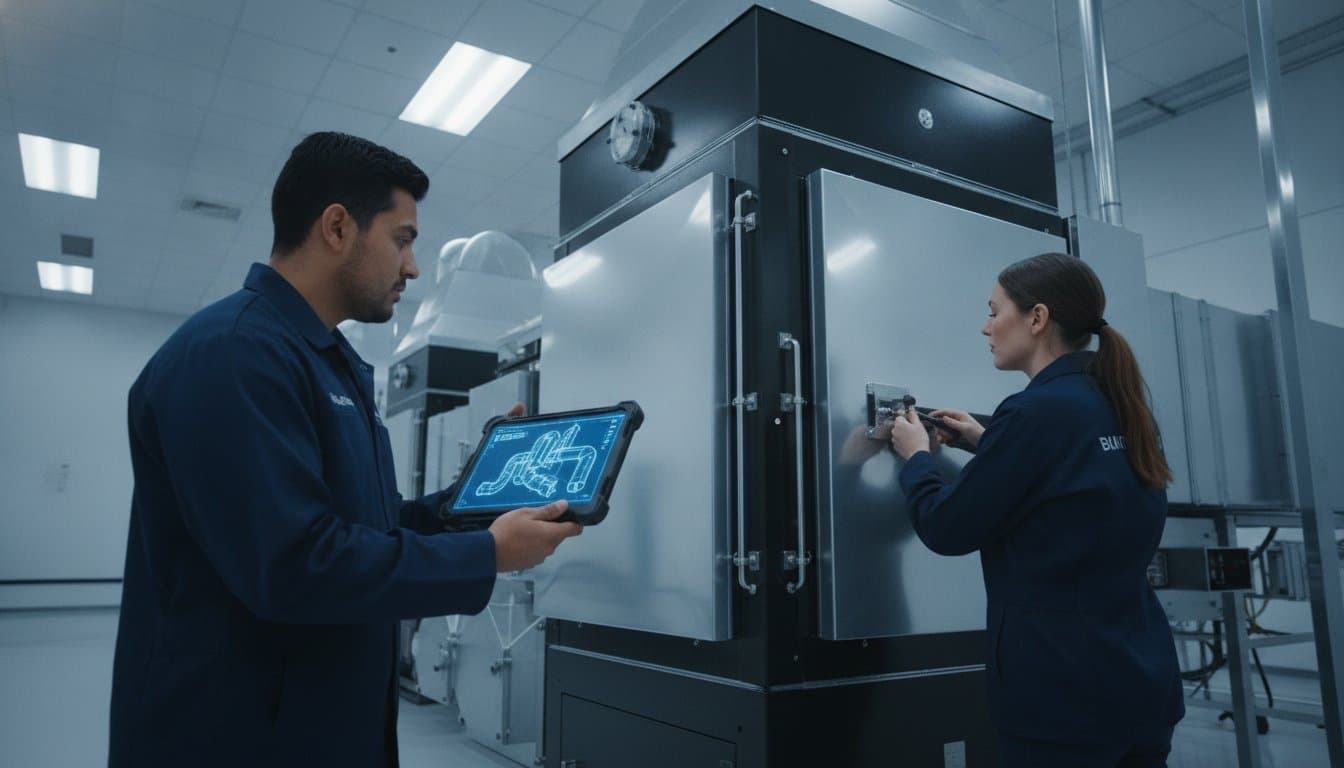
A commercial furnace installation is far more than a simple equipment swap; it represents a complex engineering milestone that dictates the operational efficiency and safety of your facility for the next twenty years. When you're managing large-scale industrial or commercial spaces, you know that a single oversight in the planning phase can lead to catastrophic change orders or unacceptable downtime. It's natural to feel concerned about how a new system will integrate with existing infrastructure or whether it'll deliver the promised energy savings once the technicians leave the site.
This article outlines the disciplined methodology and technical protocols necessary to execute a high-performance commercial furnace installation that guarantees long-term reliability. You'll learn how advanced strategies, such as Building Information Modeling and precision in-house fabrication, allow for a seamless transition that meets the most rigorous industrial standards. We'll walk through the essential phases of strategic coordination and modern logistical planning that ensure your facility remains stable, efficient, and fully compliant with all safety regulations.
Key Takeaways
- Understand why a commercial furnace installation requires a strategic infrastructure approach to ensure seamless mechanical integration within large-scale facilities.
- Identify the core technologies behind high-efficiency condensing units and forced-air systems that drive industrial thermal precision.
- Learn how Building Information Modeling (BIM) facilitates 3D coordination to mitigate project risks and eliminate expensive field interferences.
- Discover the critical role of in-house fabrication and logistical planning in managing complex equipment deliveries and urban site transitions.
- Establish a framework for lifecycle management through proactive maintenance programs that safeguard your heating system's long-term performance.
Table of Contents
- Understanding Commercial Furnace Installation: A Strategic Infrastructure Requirement
- Core Technologies in Modern Commercial Heating Systems
- Strategic Engineering: The Role of BIM and Load Calculations
- The Installation Lifecycle: From Fabrication to Commissioning
- Long-Term Reliability: Post-Installation and Lifecycle Management
Understanding Commercial Furnace Installation: A Strategic Infrastructure Requirement
A commercial furnace installation constitutes a foundational mechanical integration rather than a simple utility upgrade, serving as the primary driver of thermal stability for large-scale facilities. This process demands a disciplined engineering approach that accounts for the unique architectural complexities of the building, ensuring that every component functions as a synchronized unit. Whether the project involves HVAC new construction or a strategic replacement within an existing structure, the focus remains on long-term infrastructure integrity and systematic execution. Professionals must evaluate current ductwork capacity and electrical infrastructure before commissioning a new system to avoid the friction of unforeseen technical gaps during the installation lifecycle.
Industrial vs. Residential Heating Standards
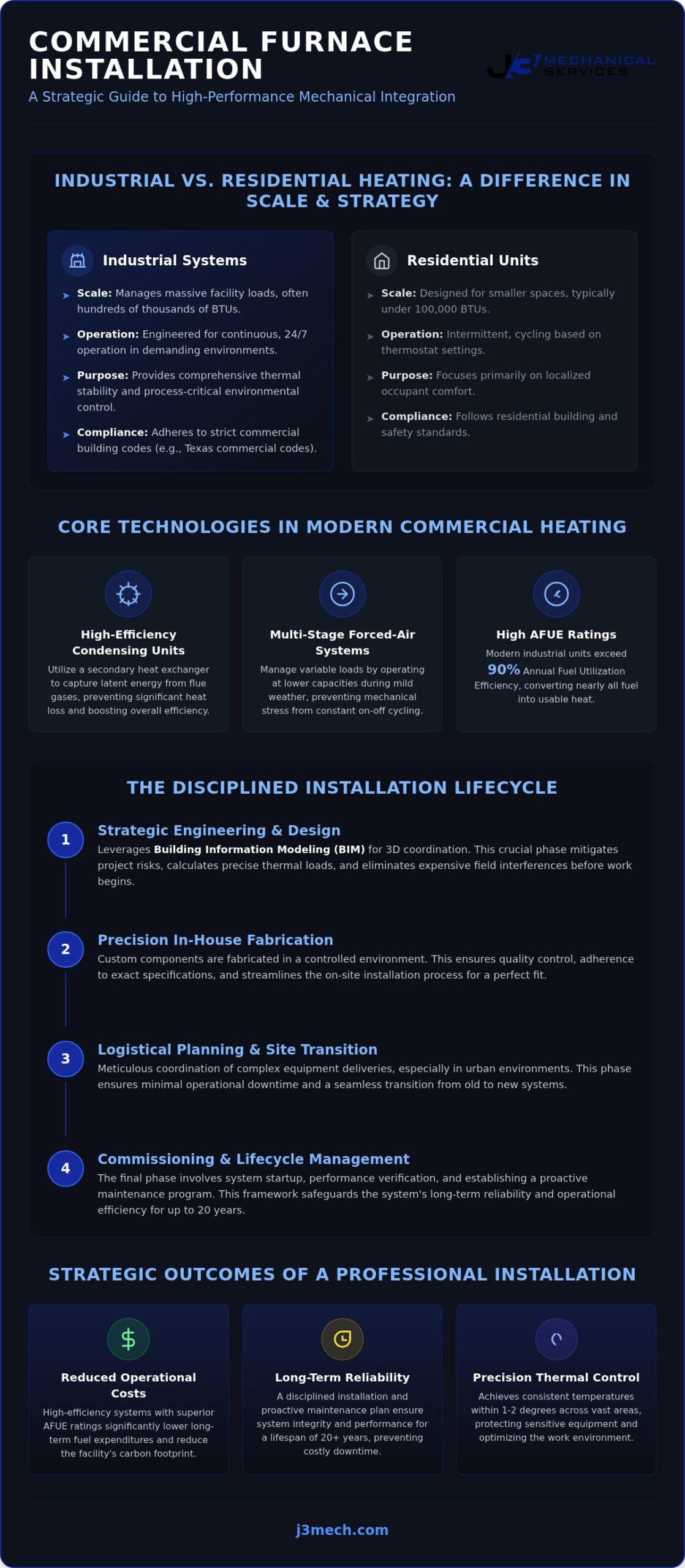
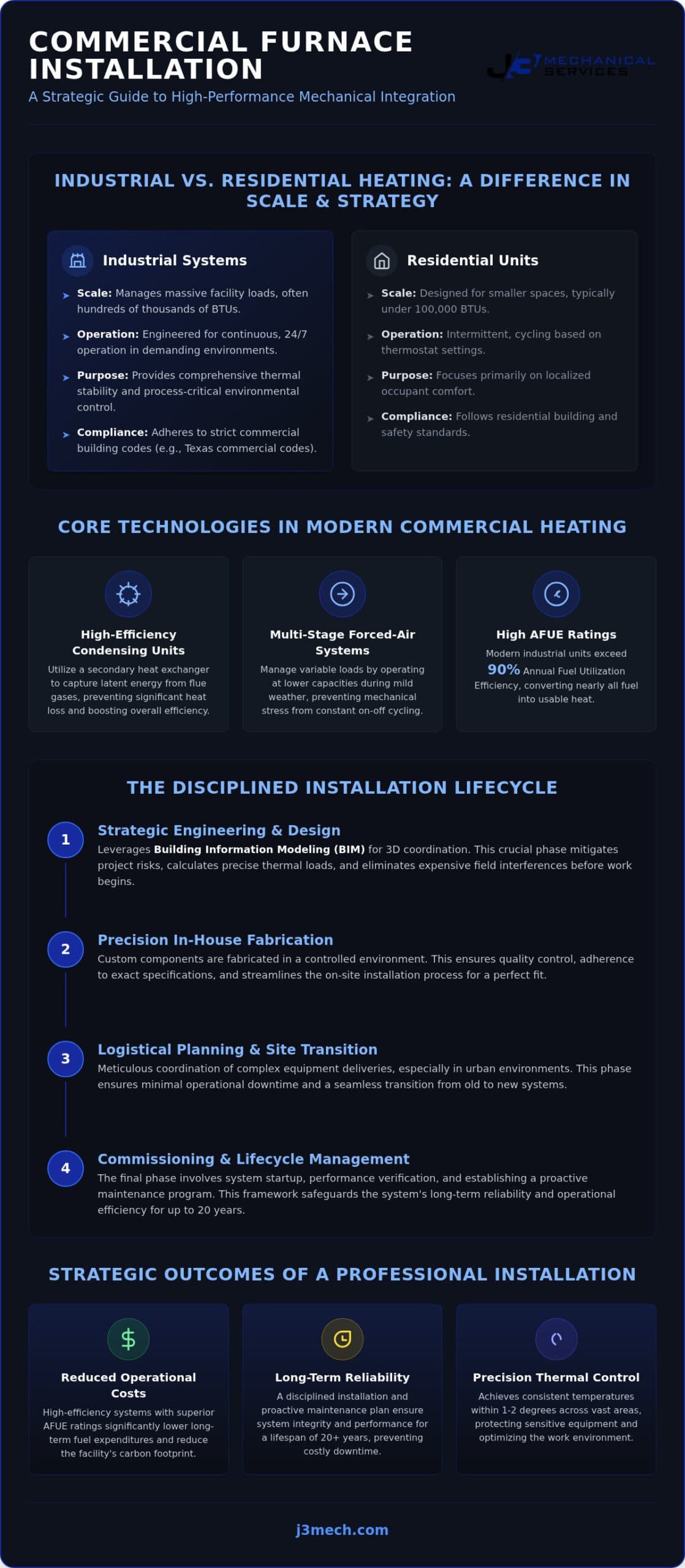
Industrial heating requirements differ fundamentally from residential standards in both scale and operational intensity. While residential units focus on localized comfort, industrial systems must manage comprehensive facility loads that often reach hundreds of thousands of BTUs, requiring high-capacity burners and sophisticated distribution networks. These systems are engineered for durability and continuous operation in demanding environments where mechanical failure results in significant operational downtime. Adhering to Texas commercial building codes is a non-negotiable aspect of the installation, ensuring that every safety protocol and technical standard is met with precision. For a broader technical industrial furnace overview, one can see how these high-output systems are categorized by their specific mechanical roles in environmental control and industrial processing.
The Economic Impact of Proper System Selection
Selecting the appropriate high-efficiency furnace is a strategic financial decision that directly impacts long-term operational expenditures. By prioritizing systems with superior AFUE ratings, facility managers can significantly reduce overhead costs while improving the building's overall carbon footprint. In the specific climate of Central Texas, these heating systems also play a critical role in humidity management, preventing the structural degradation and air quality issues that occur when moisture levels aren't properly controlled. Thermal precision is defined as the ability to maintain consistent temperatures within 1-2 degrees across massive square footage. This level of accuracy is essential for protecting sensitive equipment and maintaining a productive environment for personnel throughout the facility's lifecycle. A well-coordinated commercial furnace installation ensures that these economic and operational benchmarks are achieved from the first day of commissioning.
Core Technologies in Modern Commercial Heating Systems
The technical landscape of commercial heating has shifted toward high-performance, modular systems that prioritize both thermal output and resource conservation. A modern commercial furnace installation leverages forced-air technology that scales to meet the unique demands of industrial warehouses or multi-story corporate centers. These systems utilize multi-stage heating protocols to manage variable loads, allowing the furnace to operate at lower capacities during mild weather. It's an approach that prevents the mechanical stress associated with constant cycling, which is a primary cause of premature system failure in large-scale facilities.
Central to this efficiency is the mechanics of high-efficiency condensing units. Unlike traditional furnaces that lose significant heat through flue gases, condensing models incorporate a secondary heat exchanger to capture latent energy. This design is essential for meeting the rigorous 2026 performance benchmarks. As facility managers navigate evolving Federal HVAC regulations and standards, the focus on Annual Fuel Utilization Efficiency (AFUE) ratings has intensified. Many industrial models now achieve ratings exceeding 90%, ensuring that nearly every unit of fuel is converted into usable heat for the facility.
Fuel Sources and Efficiency Profiles
The selection of a fuel source depends heavily on the facility's existing infrastructure and long-term sustainability goals:
- Natural Gas Furnaces: These remain the industrial standard for their ability to provide rapid thermal recovery and high-volume heating in cold climates.
- Electric Heating Solutions: Often utilized in facilities with specific environmental mandates or where gas lines are inaccessible, these units offer simplified maintenance and zero on-site emissions.
- Hybrid Systems: By combining electric heat pumps with gas-fired furnaces, these dual-fuel configurations optimize energy consumption by switching sources based on real-time outdoor temperatures.
Advanced Components for System Longevity
A high-performance installation integrates components designed for industrial lifecycles. Variable-speed blowers allow for precision air distribution, adjusting airflow dynamically to maintain the desired setpoint without the abrupt surges of single-speed motors. Corrosion-resistant heat exchangers, often fabricated from high-grade stainless steel, provide the necessary durability to withstand the chemical stresses of combustion over decades. When these components are integrated into a Building Automation System (BAS), facility managers gain total project control through remote monitoring and predictive diagnostics. For organizations planning a new project, our team provides the technical expertise required for HVAC new construction that prioritizes these advanced technologies.
Strategic Engineering: The Role of BIM and Load Calculations
The success of a commercial furnace installation is determined long before the first piece of equipment arrives on-site, rooted in a rigorous phase of digital coordination and engineering analysis. Building Information Modeling (BIM) allows our teams to construct a virtual representation of the mechanical system, identifying potential clashes between ductwork, structural steel, and electrical conduits before they manifest as costly field interferences. This proactive modeling phase serves as a critical risk-mitigation strategy, allowing for the pre-fabrication of components that fit perfectly within the designated mechanical footprint. By resolving these spatial conflicts in a virtual environment, we eliminate the need for mid-project change orders that frequently derail construction timelines and budgets.
Precision Modeling for Complex Mechanical Rooms
Mapping ductwork and piping within the constraints of a dense mechanical room requires a high level of technical discipline to ensure both optimal airflow and future service access. Utilizing digital twin technology is particularly advantageous for facility replacements, as it provides a precise roadmap for integrating modern, high-efficiency units into legacy environments without compromising structural integrity. Adhering to these commercial hvac installation standards ensures that every component is positioned for maximum performance and long-term maintainability. It's a methodical approach that prioritizes the "master builder" philosophy, where meticulous preparation dictates the quality of the final physical product.
Beyond spatial coordination, the engineering phase must include exhaustive load calculations to determine the exact thermal requirements of the facility. These calculations move beyond simple square footage estimates, accounting for Texas-specific variables such as high solar gain, the thermal resistance of the building envelope, and the internal heat generated by high occupancy density. Precision in this phase is essential; an inaccurately sized system will fail to provide the thermal stability required for industrial operations, leading to inconsistent temperatures and increased mechanical stress across the entire infrastructure.
Accurate Sizing to Prevent System Short-Cycling
An over-sized furnace is a liability, often leading to rapid short-cycling that increases mechanical wear and prevents the system from reaching its rated efficiency. When a unit is too large for the space, it reaches the thermostat setpoint too quickly, shutting down before it can properly dehumidify or stabilize the air throughout the building. We analyze specific building usage patterns to determine peak heating requirements, ensuring the chosen hardware is perfectly matched to the facility's demand. All calculations are verified against localized climate data for San Antonio and Austin, providing a reliable heating solution that remains efficient even during the most unpredictable Central Texas weather shifts. This level of accuracy protects your investment by ensuring the system operates within its intended design parameters from the moment of commissioning. Facilities requiring comprehensive year-round climate control should also consider how a precision-engineered commercial ac unit installation integrates with the heating infrastructure to deliver consistent thermal management across all seasons.
The Installation Lifecycle: From Fabrication to Commissioning
Transitioning from a virtual model to a physical commercial furnace installation requires a level of logistical mastery that accounts for every variable on the job site. This execution phase is particularly demanding in the high-density urban corridors of Central Texas, where equipment delivery and crane lifts must be synchronized with surgical precision. Our project managers oversee these maneuvers with a disciplined focus on minimizing facility downtime and ensuring that heavy equipment is placed safely and accurately. Throughout the process, technicians adhere to rigorous safety protocols during the critical connection of gas lines and high-voltage electrical circuits, treating the installation as a vital piece of industrial infrastructure rather than a simple hardware swap.
The Advantage of In-House Ductwork Fabrication
Utilizing in-house fabrication capabilities provides a significant strategic advantage by allowing for the creation of custom-engineered ductwork transitions that match the unique geometry of the facility. These components are essential for maintaining the airtight seals and static pressure levels required for high-efficiency operation. By removing the reliance on third-party fabrication shops, we'll eliminate potential bottleneck delays and maintain total quality control over every fitting. This "master builder" approach ensures that each component meets the rigorous industrial standards of J3 Mechanical Services for durability and performance, reinforcing the long-term reliability of the entire heating system. It's a proactive way to ensure that the physical installation mirrors the precision established during the initial modeling phase.
Final Commissioning and Performance Verification
The final stage of the lifecycle involves a methodical commissioning process where the system is tested against its original design specifications. Technicians conduct a series of verification steps, including combustion safety analysis, airflow balancing across all zones, and precise thermostat calibration. This data-driven approach ensures the furnace delivers the thermal precision promised during the engineering phase while identifying any minor adjustments needed for optimal performance. All findings are meticulously documented to provide a clear performance baseline, which is critical for future maintenance and regulatory compliance. If you're evaluating the integrity of an existing system, you should review our commercial hvac replacement checklist to determine if your current infrastructure meets modern efficiency standards.
For organizations seeking a partner capable of executing complex mechanical projects with technical mastery and disciplined oversight, our team provides the expertise required for a successful commercial furnace installation.
Long-Term Reliability: Post-Installation and Lifecycle Management
The successful commissioning of a commercial furnace installation marks the beginning of a multi-decade operational lifecycle rather than the simple conclusion of a construction project. Maintaining the thermal precision established during the initial engineering phase requires a transition from active construction to a structured, proactive maintenance program. For large-scale facilities, a reactive approach to mechanical issues isn't just inefficient; it's a liability that threatens building integrity and operational continuity. By establishing a rigorous oversight schedule immediately following the installation, facility managers protect their capital investment and ensure that the high-efficiency benchmarks set during the design phase remain consistent over time.
Preventive Maintenance for Industrial Furnaces
A disciplined maintenance strategy focuses on systematic verification and tuning to prevent the gradual degradation of system performance. Regular inspections of high-capacity commercial burners are essential for identifying combustion inefficiencies or mechanical wear before they escalate into costly failures. Our approach includes several critical benchmarks:
- Scheduled Component Care: Systematic filter changes and sensor cleanings prevent debris buildup that can compromise airflow and thermostat accuracy.
- Structural Integrity Checks: Recurring heat exchanger inspections are vital for detecting stress fractures or corrosion, particularly in high-demand industrial environments.
- Systematic Tuning: Regular adjustments to the combustion process ensure the system maintains its rated AFUE efficiency, keeping operational expenditures predictable.
Beyond traditional tasks, we'll utilize predictive analytics to monitor system data and identify potential failure points before they impact your operations. This forward-thinking methodology allows for scheduled repairs during low-impact hours, effectively eliminating the anxiety associated with unexpected downtime. When critical infrastructure is at stake, having 24/7 emergency support provides a necessary safety net, ensuring that expert technicians are available to maintain facility stability regardless of the hour.
Partnering with a Disciplined Mechanical Contractor
Choosing a partner for a commercial furnace installation involves more than evaluating technical specifications; it requires selecting a firm that values ethical consistency and professional accountability. Our faith-based approach to commercial contracts ensures that every project is managed with a sense of duty and technical mastery. Serving San Antonio, Austin, and the Rio Grande Valley, J3 Mechanical Services brings a "master builder" perspective to every facility, prioritizing long-term mechanical health over short-term fixes. When evaluating commercial HVAC installers in Central Texas, it's essential to prioritize firms that combine BIM-coordinated precision with in-house fabrication capabilities and a proven track record of compliance with 2026 regulatory mandates. We understand that your heating system is a critical component of your building's infrastructure, and we treat our role as its steward with the gravity it deserves. Ultimately, a furnace is only as reliable as the contractor who installs it.
Securing the Future of Your Facility's Thermal Infrastructure
Executing a successful commercial furnace installation requires a synthesis of advanced engineering, precision fabrication, and disciplined project management. By prioritizing Building Information Modeling for spatial coordination and utilizing in-house fabrication for custom components, facility managers eliminate the risks of costly field interferences and operational delays. The integration of high-efficiency technology, backed by a rigorous commissioning process, ensures that your infrastructure meets the thermal demands of the modern industrial landscape while maintaining long-term cost control. It's a methodical approach that prioritizes stability over quick fixes.
Our methodology is rooted in a "master builder" philosophy that views every mechanical system as a critical responsibility. We provide the technical mastery and proactive oversight necessary to guide your project from initial load calculations to ongoing lifecycle management. With BIM-coordinated precision and the safety net of 24/7 emergency service response, your facility remains stable and efficient under any conditions. We invite you to Consult with J3 Mechanical Services for Your Next Installation and experience a partnership defined by accountability and technical excellence. Your facility's reliability is our primary objective, and we're ready to ensure your project's success.
Frequently Asked Questions
What is the average lifespan of a commercial furnace in a Texas facility?
A commercial furnace typically maintains a functional lifespan of 15 to 20 years when supported by a disciplined maintenance program. In Central Texas, the combination of high humidity and significant temperature swings can accelerate the degradation of heat exchangers and electronic components, making recurring professional inspections essential for reaching the two-decade mark.
How long does a typical commercial furnace installation take for a medium-sized office?
A standard commercial furnace installation for a medium-sized facility generally requires three to five business days to complete. This timeframe accounts for the systematic removal of legacy equipment, the integration of custom-fabricated ductwork transitions, and a rigorous commissioning phase to verify that the system meets all design specifications.
What are the most common signs that a commercial furnace needs replacement instead of repair?
Strategic replacement is often necessary when a system experiences frequent mechanical failures, a sustained increase in operational energy costs, or an inability to maintain thermal precision within the facility. If the cost of a single repair exceeds 50% of the total value of a new installation, or if the unit is over 15 years old, a full system upgrade is typically the more fiscally responsible path.
How does BIM modeling reduce the cost of furnace installation in new construction?
BIM modeling reduces project expenditures by identifying spatial conflicts between mechanical, electrical, and structural systems in a virtual environment before ground is broken. This proactive coordination prevents the need for expensive field modifications and mid-construction change orders, ensuring that the installation stays within its original budgetary and chronological parameters.
What efficiency rating (AFUE) should I look for in a 2026 commercial furnace?
For installations following 2026 standards, facility managers should prioritize units with an AFUE rating of at least 90%. Many high-performance industrial models now achieve ratings of 95% or higher, which significantly reduces long-term operational overhead and ensures compliance with evolving federal energy regulations and environmental benchmarks.
Can a commercial furnace installation be performed during business hours without disruption?
Disruption can be minimized through phased execution and advanced logistical coordination, though some facilities may benefit from after-hours scheduling to maintain total environmental control. We utilize specific isolation protocols to ensure that critical business operations continue while technicians complete the primary mechanical integration and electrical connections.
Do Texas regulations require specific permits for industrial furnace installation?
Texas municipal codes require specific mechanical permits and mandatory inspections for all industrial heating projects to ensure adherence to safety and environmental standards. The requirements often vary between jurisdictions such as San Antonio and Austin, requiring a contractor who is well-versed in the local regulatory landscape and building code enforcement.
What is the difference between a commercial furnace and a rooftop unit (RTU)?
A commercial furnace is an indoor mechanical component designed specifically for high-capacity heating, whereas a Rooftop Unit is a self-contained, weatherized package that provides both heating and cooling. While a furnace is often integrated into an internal mechanical room, an RTU is situated on the building's exterior to conserve internal square footage and simplify certain maintenance access points.
Need a hand with your building's HVAC?
Free quotes and honest answers from licensed commercial technicians across South Texas.