
Vetting Commercial HVAC Fabrication in San Antonio: A 2026 Buying Guide
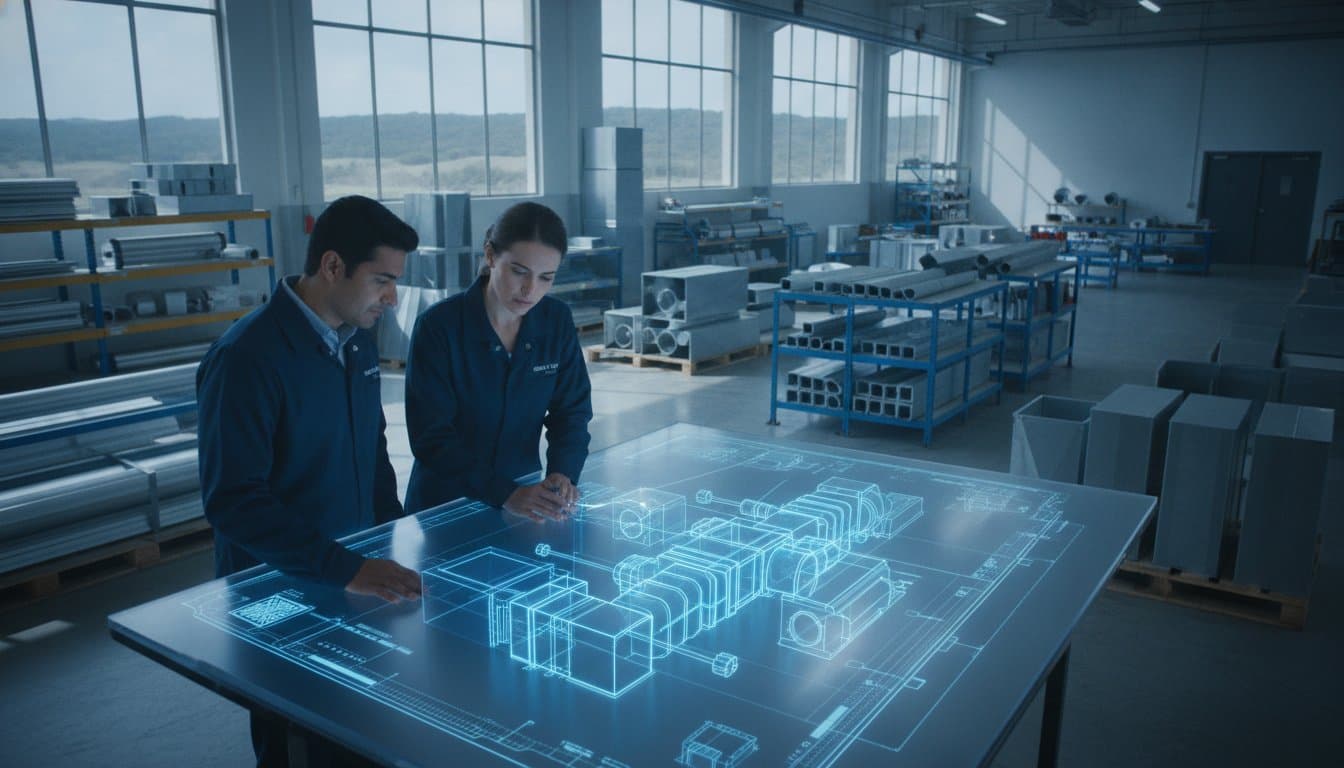
In the high-stakes environment of 2026 industrial development, the success of a mechanical installation is no longer decided on the job site; it is dictated months earlier within the digital precision of a fabrication shop. When vetting commercial HVAC fabrication San Antonio providers, the distinction between a standard contractor and a strategic partner lies in their ability to eliminate field errors before the first piece of ductwork is even loaded onto a transport vehicle. A failure to coordinate complex systems during the design phase often leads to costly change orders and unacceptable downtime in critical business environments that require absolute climate stability.
You likely recognize that the traditional, reactive approach to mechanical construction is insufficient for the demands of modern infrastructure and evolving energy codes. This 2026 buying guide provides the technical framework necessary to identify top-tier mechanical partners by evaluating their Building Information Modeling (BIM) coordination, in-house fabrication capabilities, and industrial-scale reliability. We will examine how digital modeling and off-site manufacturing converge to minimize field labor and ensure your facility benefits from precision-engineered systems that offer reliable, 24/7 support throughout the entire building lifecycle.
Key Takeaways
- Understand how digital modeling and clash detection serve as the backbone of modern mechanical projects, identifying trade conflicts before construction begins.
- Evaluate the logistical advantages of commercial HVAC fabrication San Antonio facilities that use model-driven prefabrication to reduce field labor and rework.
- Distinguish between industrial-scale experts and residential hybrids to ensure your facility's critical infrastructure is managed by technicians with specialized commercial engineering training.
- Identify the specific technical requirements for San Antonio's unique climate, including advanced humidity control and mitigation strategies for regional hard water impacts.
- Prioritize partners who utilize a proactive master builder methodology to maintain total project control and ensure long-term system stability.
Table of Contents
- The Evolution of Commercial HVAC Fabrication in San Antonio
- Digital Coordination: The Strategic Value of BIM and In-House Fabrication
- Vetting Contractors: Commercial Specialization vs. Residential Hybrids
- Local Selection Criteria: San Antonio Climate and Logistics
- J3 Mechanical Services: Precision Fabrication and Disciplined Execution
The Evolution of Commercial HVAC Fabrication in San Antonio
The industrial landscape of Central Texas is undergoing a profound transformation, moving away from decentralized commercial developments toward high-density, mission-critical infrastructure. As San Antonio's industrial corridors expand to accommodate massive data centers, specialized medical facilities, and high-occupancy retail hubs, the technical requirements for mechanical systems have transcended the capabilities of standard equipment. This shift has elevated the role of commercial HVAC fabrication San Antonio from a simple procurement task to a vital engineering discipline. Modern facilities require a level of precision that traditional, catalog-ordered components cannot provide, especially when navigating the rigorous demands of the 2026 Texas energy codes. It's no longer enough to simply install equipment; the modern mechanical contractor must act as a strategic infrastructure partner who views the system as the building's primary life-support mechanism.
The Industrial Growth of Central Texas
The rapid acceleration of commercial construction in the region, particularly within Climate Zone 2A, necessitates a departure from reactive mechanical design. Large-scale projects now prioritize engineered fabrication workflows that account for extreme thermal loads and the high latent heat common in the San Antonio environment. Standard Heating, ventilation, and air conditioning (HVAC) installations often struggle to maintain the strict environmental tolerances required by pharmaceutical storage or server farm cooling. Because these high-stakes environments don't allow for error, the industry is seeing a transition where the "master builder" persona returns to the forefront. This approach ensures that every fabricated component is designed for industrial-scale reliability and long-term operational stability before it ever arrives at the job site.
Why Custom Fabrication is a Commercial Necessity
Off-the-shelf ductwork and mechanical components frequently fail to align with the sophisticated architectural constraints of modern commercial buildings. Custom-engineered solutions allow for the seamless integration of complex piping and ventilation systems within limited plenum spaces, which directly influences the overall valuation and performance of the facility. Precision is the baseline for 2026 standards.
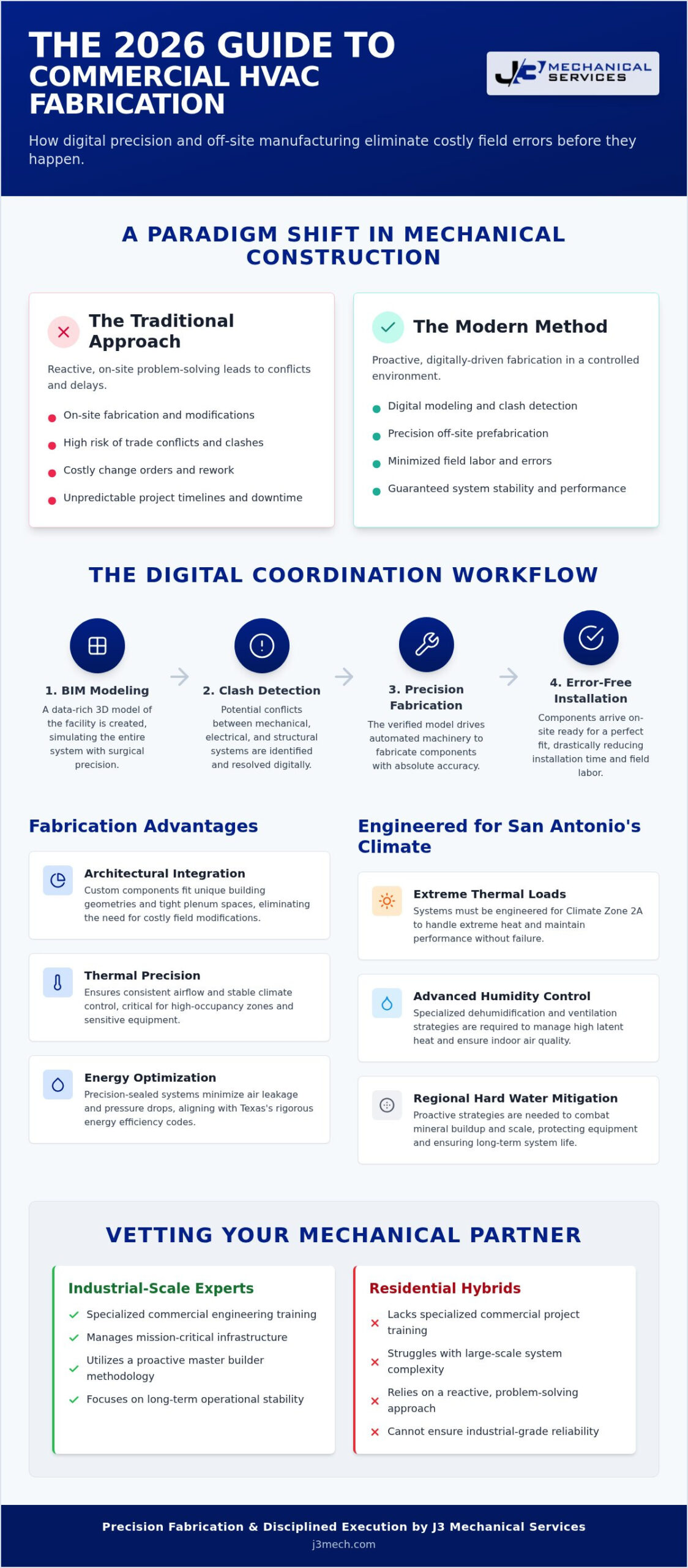
- Architectural Integration: Fabricated components are designed to fit the unique geometry of a building, reducing the need for field modifications and keeping the project timeline on track.
- Thermal Precision: Custom ductwork ensures consistent airflow distribution, which is critical for maintaining occupant comfort and equipment safety in high-occupancy zones.
- Energy Optimization: Precision-engineered systems minimize air leakage and pressure drops, aligning with the energy efficiency mandates that define modern Texas construction.
When a mechanical system is fabricated in-house, the contractor maintains absolute control over the quality of the materials and the accuracy of every dimension. This disciplined approach eliminates the variables that lead to field labor delays and trade conflicts. Ultimately, the quality of the fabricated mechanical infrastructure serves as a primary indicator of a building's longevity and its ability to support high-stakes commercial operations without the risk of catastrophic system failure.
Digital Coordination: The Strategic Value of BIM and In-House Fabrication
Building Information Modeling (BIM) represents the definitive pre-construction phase for any sophisticated mechanical project, serving as the digital backbone that supports the entire lifecycle of commercial HVAC fabrication San Antonio. It's a proactive methodology rather than a reactive design process. By creating a data-rich, three-dimensional representation of the facility, engineers simulate the installation process with surgical precision. This digital environment allows for comprehensive clash detection, where potential conflicts between mechanical, electrical, and structural systems are identified and resolved before a single piece of sheet metal is cut or a technician arrives on site. This methodical verification ensures that the physical components manufactured in the shop align perfectly with the building's structural realities.
BIM as a Risk-Mitigation Tool for Facility Managers
Facility managers often face the burden of unexpected costs during new construction, but a disciplined BIM workflow mitigates these risks by moving from a validated digital model directly to a precision-fabricated component. This systematic approach reduces costly change orders by up to 30% in large-scale commercial projects, as it eliminates the guesswork typically associated with field coordination. BIM is the essential pre-construction phase for modern mechanical engineering, providing a roadmap that guides every subsequent stage of the project with technical transparency.
Advantages of the In-House Fabrication Shop
Maintaining an in-house fabrication shop provides a level of logistical certainty that third-party suppliers simply cannot match. By controlling the production of sheet metal and specialized components internally, a mechanical partner eliminates supply chain delays and maintains rigorous oversight of material quality. This is particularly vital for specialized environments like clean rooms or industrial kitchens, where custom fittings must meet exacting standards for airflow and sanitation. Shop-fabricated components, engineered to the exact specifications of the BIM model, ensure tighter seals and superior system performance compared to generic, field-modified alternatives. For a comprehensive technical breakdown of how SMACNA-compliant HVAC sheet metal fabrication integrates with BIM coordination to eliminate installation errors, our precision engineering guide provides the detailed methodology behind this process.
Direct oversight of the fabrication process reinforces a culture of accountability and technical mastery. When the same entity responsible for the digital model also manages the physical production, the risk of miscommunication is virtually eliminated. This integration results in minimized field labor and accelerated project timelines, as components arrive on site ready for immediate installation. For those overseeing high-stakes developments, partnering with a firm that integrates Building Information Modeling (BIM) with in-house production is the most reliable way to ensure long-term mechanical stability and project control.
Vetting Contractors: Commercial Specialization vs. Residential Hybrids
Selecting a mechanical partner for a sophisticated project requires a discerning eye for technical specialization rather than mere proximity or price. The technical divide between residential services and industrial contracting is vast; maintaining a multi-ton centrifugal chiller or a high-pressure boiler requires a depth of engineering knowledge that far exceeds the scope of standard home units. Companies that attempt to serve both markets often lack the specialized training and heavy-duty assets necessary to manage high-stakes commercial environments. True commercial HVAC fabrication San Antonio specialists invest heavily in the diagnostic tools and heavy-duty rigging required to maneuver and maintain large-scale assets in complex architectural settings.
Accepting the lowest bid from a contractor who lacks in-house fabrication capabilities often introduces hidden risks that manifest as field labor delays. These entities frequently rely on third-party suppliers, leading to logistical gaps and a lack of accountability for the final product's engineering integrity. A disciplined commercial partner views their work through the lens of critical infrastructure, ensuring that every fabricated component meets rigorous industrial standards before it leaves the shop floor. This professional accountability is what separates a master builder from a general service provider. It's a matter of ensuring that the components don't just fit, but perform under the stress of continuous industrial operation. Sustaining that performance over time requires an equally disciplined approach to commercial HVAC maintenance as a strategic protocol for critical asset management, ensuring that installed systems continue to operate at peak efficiency throughout their lifecycle.
Evaluating Industrial Capacity
Criteria for assessing a contractor's ability to manage high-rise and large-footprint projects must include an audit of their digital and physical infrastructure. High-capacity projects demand a logistical framework that can handle the sheer volume of material and the complexity of multi-trade coordination. Leading firms prioritize investment in advanced BIM software and fabrication technology to ensure that their output is both constructible and efficient. For a deeper analysis of these standards, you should review our guide on What Defines a Leading Commercial AC Company in 2026? to understand the modern benchmarks for mechanical excellence.
Regulatory Compliance and Safety Standards
Compliance with San Antonio building codes and industrial safety protocols is non-negotiable for large-scale contracts. Commercial-only firms maintain a culture of safety that aligns with OSHA standards, recognizing that job site incidents are a liability to the project's timeline and the client's reputation. This commitment extends to financial stability, where substantial bonding capacity and specialized insurance coverage provide the necessary protection for major capital investments. Because these firms focus exclusively on the commercial sector, they prioritize facility uptime and operational continuity over simple comfort repairs, viewing the mechanical system as a vital component of the building's valuation and long-term stability. Facility managers responsible for heating assets should also consult the commercial boiler maintenance Texas checklist for 2026 to ensure regulatory adherence and avoid the daily penalties now imposed by the Texas Department of Licensing and Regulation.
Local Selection Criteria: San Antonio Climate and Logistics
Engineering mechanical systems for the South Texas environment requires a specialized understanding of the "Latent Load," which refers to the energy required to remove moisture from the air rather than just lowering the temperature. In San Antonio's Climate Zone 2A, humidity control is the primary technical challenge for commercial facilities. Standard systems often fail because they are not sized or fabricated to manage these high moisture levels, leading to poor indoor air quality and potential structural damage. A disciplined approach to commercial HVAC fabrication San Antonio ensures that ductwork and cooling coils are specifically engineered to handle these extreme environmental stresses, maintaining a stable internal climate even during the peak of the Texas summer.
The chemical composition of Central Texas water presents another significant hurdle for industrial mechanical systems. The regional hard water, characterized by high mineral content, causes rapid scale accumulation in cooling towers, boilers, and fabricated piping. Without precision-engineered water treatment and robust material selection, these assets face premature degradation and reduced thermal efficiency. When fabrication is handled with an authoritative understanding of local conditions, piping systems are designed with the necessary access points and material thickness to withstand the corrosive effects of mineral buildup and rigorous descaling protocols.
San Antonio's unique architectural landscape, which blends historic assets with modern industrial hubs, demands a "master builder" perspective for successful retrofitting. Integrating contemporary, high-efficiency mechanical systems into older structures requires custom-fabricated components that respect existing structural constraints while meeting 2026 energy standards. This level of logistical coordination is impossible with off-the-shelf parts. For developers and project managers initiating ground-up developments, understanding the full scope of commercial HVAC new construction in San Antonio is essential to preventing mid-construction change orders and ensuring accurate load calculations from the outset. For a broader perspective on how these requirements are shaping the industry, you should explore Business HVAC Trends 2026: The Strategic Evolution of Commercial Mechanical Systems.
Designing for Resilience in Central Texas
Maintaining Indoor Air Quality (IAQ) during extreme heat cycles requires a proactive design strategy that prioritizes durability. Fabricated components are often treated with specialized coatings to resist corrosion in high-humidity environments, ensuring that the system's integrity remains uncompromised over decades of service. Methodical maintenance, combined with precision-engineered components, extends the lifecycle of industrial assets and prevents the operational disruptions that occur when systems are overextended by the regional climate. Facility operators seeking to formalize this approach should review a strategic commercial HVAC maintenance protocol that transitions operations from a reactive posture to one of total asset control.
24/7 Emergency Recovery and Local Support
Geographic proximity to the Selma, New Braunfels, and San Antonio triangle is critical for maintaining facility uptime. A disciplined emergency response protocol is essential for critical infrastructure, where even a few hours of downtime can result in significant financial loss. Local fabrication shops significantly accelerate repair times by producing custom parts on-demand, bypassing the delays associated with national supply chains. If your facility requires immediate technical intervention or a long-term infrastructure partner, you can request specialized commercial support to ensure your systems remain operational regardless of environmental pressures.
J3 Mechanical Services: Precision Fabrication and Disciplined Execution
J3 Mechanical Services operates with a singular, disciplined focus on the commercial sector, intentionally eschewing residential services and general plumbing to maintain absolute technical mastery of industrial environments. This specialization ensures that our engineering resources remain concentrated on the complex requirements of large-scale infrastructure, where the margin for error is non-existent. Our "Master Builder" methodology integrates advanced Building Information Modeling with our commercial HVAC fabrication San Antonio facility to provide total project control from the initial design phase through final commissioning. Rooted in faith-based principles, our corporate culture emphasizes ethical duty and transparent accountability, ensuring that every mechanical contract we execute is managed with the highest level of professional rigor.
We serve the greater San Antonio region with a commitment to 24/7 emergency recovery and proactive maintenance, recognizing that our work supports critical infrastructure that must remain operational under any environmental stress. By maintaining a steady, methodical pace in our project delivery, we reinforce our image as a stable partner capable of managing high-stakes environments without friction. Our clients benefit from a relationship defined by technical competence and a proactive stance toward risk mitigation, ensuring long-term system stability and predictable operational costs.
The J3 Fabrication Advantage
Our in-house sheet metal shop provides a level of precision and quality control that third-party suppliers simply cannot replicate. J3 utilizes BIM to eliminate trade conflicts and streamline new construction, ensuring that every component is validated digitally before it reaches the production floor. This integrated approach allows us to manage the entire mechanical lifecycle, reducing field labor and eliminating the logistical gaps that often derail complex industrial projects. By producing components on-demand to exact specifications, we ensure that every installation meets the rigorous standards required for 2026 commercial architecture.
Commencing Your Mechanical Assessment
Engaging J3 Mechanical Services for new construction or a strategic system replacement begins with a comprehensive facility audit and mechanical engineering review. During this assessment, our team evaluates your current infrastructure against modern performance benchmarks and regional climate demands. We provide a logic-driven presentation of our findings, outlining a clear path toward optimized efficiency and reliability. To secure the stability of your facility's mechanical future, you can Partner with J3 Mechanical Services for your next San Antonio project and experience the benefits of disciplined, industrial-scale execution.
Securing the Future of Your Mechanical Infrastructure
The complexity of 2026 commercial architecture demands a mechanical partner who prioritizes digital validation and shop-controlled production over reactive field labor. By integrating Building Information Modeling with a dedicated facility for commercial HVAC fabrication San Antonio, you eliminate the trade conflicts and logistical gaps that compromise facility performance. A disciplined focus on industrial-scale assets ensures that your mechanical systems are engineered to withstand regional humidity and hard water challenges while maintaining optimal thermal precision. This methodical preparation is the only reliable way to protect your capital investment from the risks of downtime and uncoordinated installations.
Achieving long-term operational stability requires a partner who views mechanical systems as a critical infrastructure responsibility rather than a series of isolated tasks. J3 Mechanical Services provides the technical mastery and ethical consistency needed to manage high-stakes environments through advanced BIM coordination and direct in-house sheet metal fabrication. Whether you're initiating new construction or requiring 24/7 emergency response for industrial assets, our team delivers the disciplined execution your project deserves. Secure Your Critical Infrastructure with J3 Mechanical Services today to ensure your facility remains a high-performance asset for decades to come.
Frequently Asked Questions
What are the benefits of in-house HVAC fabrication for commercial projects?
In-house fabrication provides direct oversight of material quality and engineering standards, effectively eliminating the logistical delays associated with third-party suppliers. By producing components in a controlled shop environment, a mechanical partner ensures that every fitting aligns perfectly with the validated digital model. This process minimizes field labor and prevents the installation errors that typically arise from using generic ductwork in complex industrial settings.
Why is BIM coordination necessary for San Antonio new construction?
Building Information Modeling (BIM) is essential for identifying trade conflicts between mechanical, electrical, and structural systems before construction begins on-site. In San Antonio's rapidly expanding industrial corridors, where plenum space is often limited, digital coordination prevents clashes that lead to project delays. This systematic approach ensures that high-precision commercial HVAC fabrication San Antonio workflows are executed with surgical accuracy, maintaining the building's structural integrity and timeline.
How do I differentiate between a residential HVAC company and a commercial mechanical contractor?
Commercial mechanical contractors focus exclusively on industrial-scale assets like centrifugal chillers and high-pressure boilers, which require vastly different engineering expertise than residential split systems. You can identify a true commercial specialist by their investment in heavy-duty rigging tools, advanced BIM software, and specialized industrial certifications. Unlike residential hybrids, a dedicated commercial firm prioritizes facility uptime and critical infrastructure stability over simple comfort-based repairs.
What environmental factors in San Antonio affect commercial HVAC performance?
High latent loads and regional hard water are the primary environmental factors that degrade mechanical performance in Central Texas. San Antonio's humidity requires specialized dehumidification strategies to maintain indoor air quality, while the high mineral content in the water supply necessitates robust water treatment for cooling towers and boilers. Systems that aren't specifically engineered for these South Texas conditions often face premature failure and reduced thermal efficiency.
Does J3 Mechanical Services provide 24/7 emergency repair for businesses?
Yes, J3 Mechanical Services provides 24/7 emergency recovery specifically for industrial and commercial facilities that cannot afford operational downtime. We recognize that mechanical failure in a critical environment is a significant liability, so our technicians are available around the clock to restore system stability. This commitment to 24/7 oversight ensures that your facility's infrastructure remains protected, even during peak thermal stress or unexpected equipment malfunctions.
How does custom fabrication improve the energy efficiency of a facility?
Custom-fabricated components improve energy efficiency by ensuring airtight seals and optimized airflow patterns that generic ductwork cannot achieve. By engineering fittings to the exact specifications of the facility, we reduce pressure drops and minimize the workload on blowers and compressors. This precision directly aligns with 2026 energy codes, resulting in lower operational costs and a reduced carbon footprint for the entire building lifecycle.
What areas around San Antonio does J3 Mechanical serve?
J3 Mechanical Services serves the greater San Antonio region, including the industrial corridors of Selma, New Braunfels, and the surrounding Central Texas area. Our geographic proximity to these hubs allows for rapid response times and efficient logistical coordination for new construction projects. By maintaining a local presence, we provide the steady, methodical oversight required to manage complex mechanical contracts across the South Texas landscape.
How does BIM coordination reduce change orders during construction?
BIM coordination reduces change orders by validating the constructability of mechanical systems in a digital environment before any physical labor occurs. This proactive detection of trade conflicts allows engineers to resolve issues in the model rather than on the job site. By eliminating the need for field modifications, facility managers can significantly reduce unexpected construction costs and ensure that the project stays within its original budgetary and chronological constraints.
Need a hand with your building's HVAC?
Free quotes and honest answers from licensed commercial technicians across South Texas.